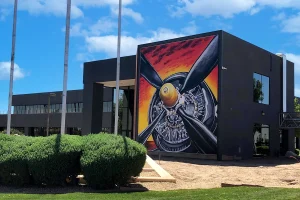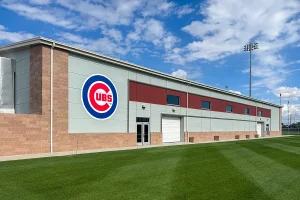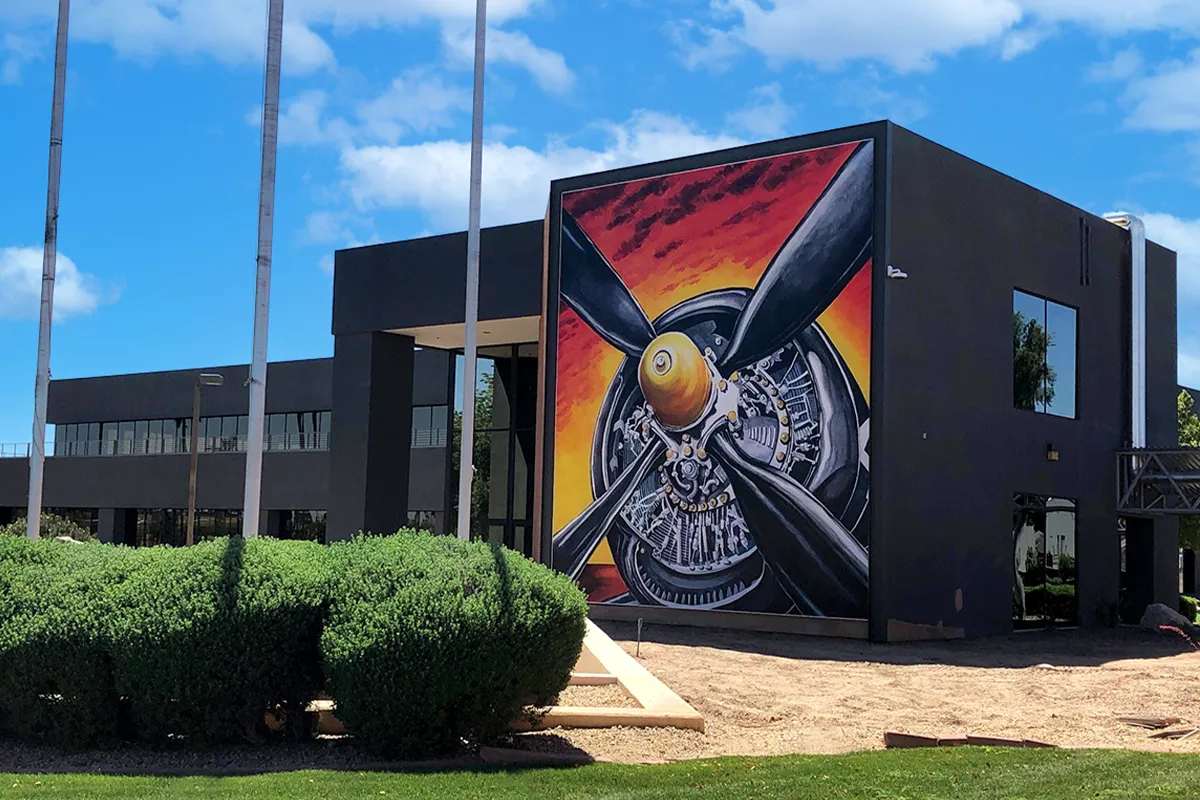
Outdoor wall murals can transform building façades, venues, campuses, retail environments, and public spaces into powerful visual experiences. Their long-term performance depends on decisions made well before printing begins.
Choosing a material labeled for outdoor use is only one part of the process. The wall surface, existing paint or coating, moisture conditions, texture, sun exposure, temperature, expected lifespan, protective finish, and installation method all affect how the finished mural will perform.
A reliable exterior mural specification begins with the site and intended use. The print film, adhesive, ink, protective layer, panel construction, and installation approach can then be selected as one compatible system.
This guide explains the factors commercial project teams should evaluate before specifying a printed outdoor wall mural, including how to recognize unsuitable conditions and reduce the risk of premature failure.
Can a Printed Wall Mural Work Outdoors?
Yes. Printed wall murals can be installed outdoors when the wall, graphic materials, environmental conditions, and installation method are compatible.
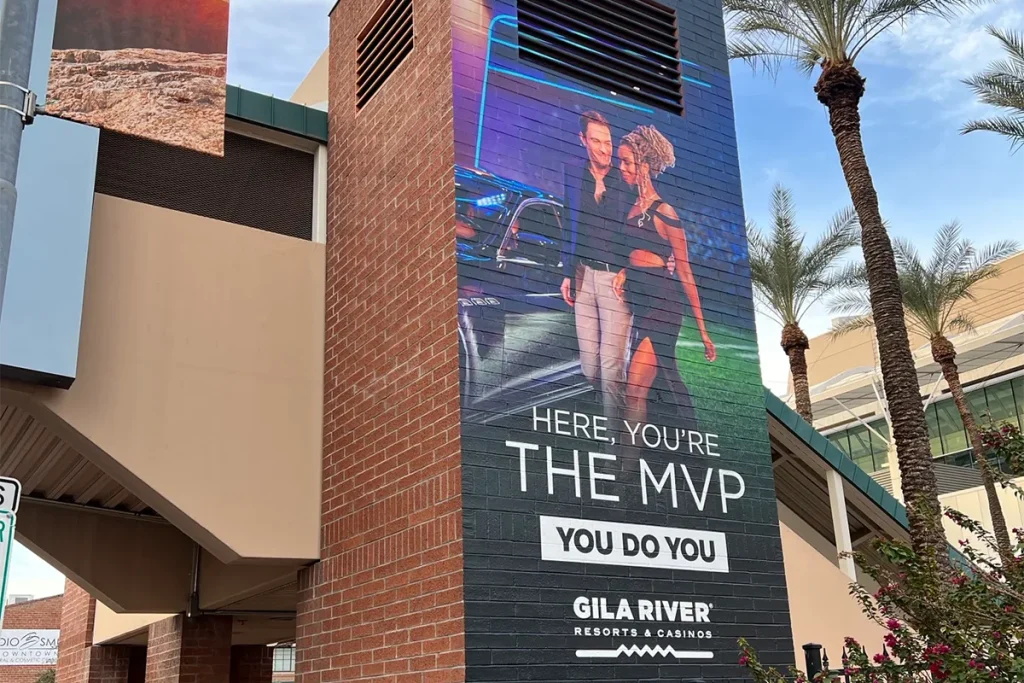
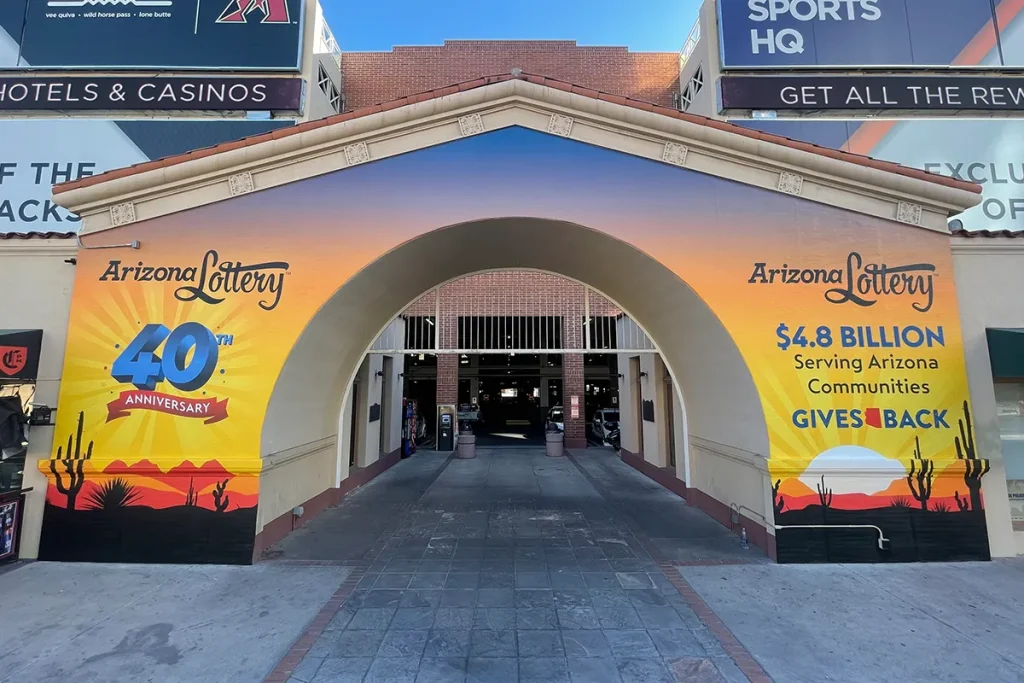
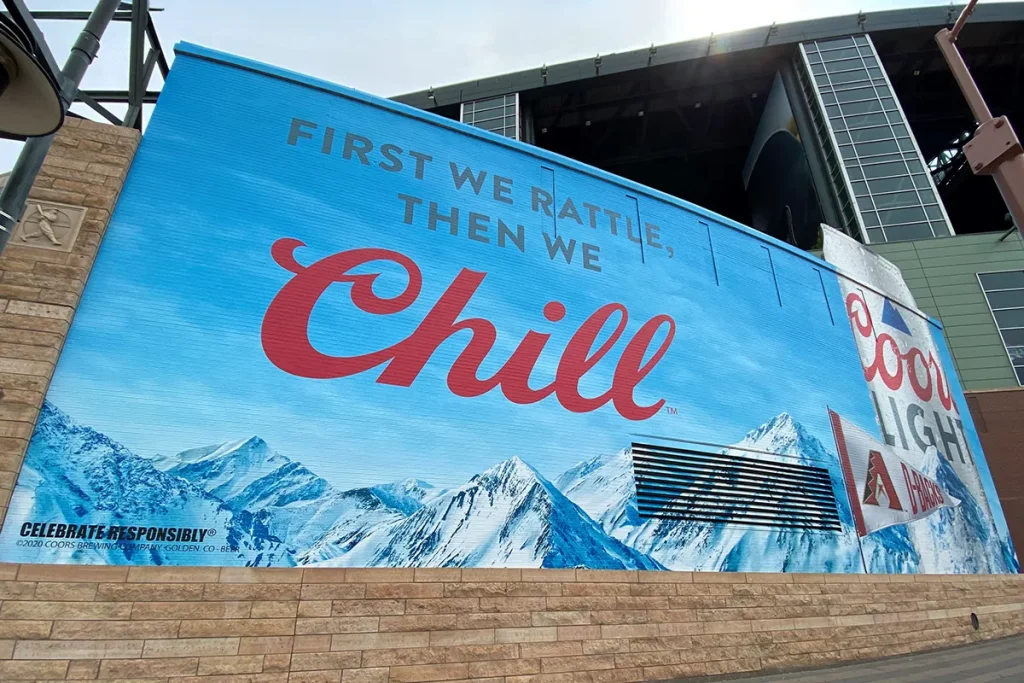
Exterior wall graphics may be applied to smooth, sealed, painted walls or to textured architectural surfaces such as brick, concrete block, concrete, and certain stucco finishes. These surfaces do not require the same products or installation techniques. A film designed for a smooth painted wall may be unable to conform to masonry texture, while an aggressive adhesive cannot compensate for loose paint, unstable stucco, contamination, or moisture moving through a wall.
“Outdoor rated” also does not mean that a graphic is appropriate for every exterior condition.
Product performance may change based on:
- Wall material and condition
- Paint, coating, or sealer compatibility
- Surface texture and mortar-joint depth
- Moisture within or behind the wall
- Sun orientation and daily UV exposure
- Surface temperature during installation
- Heat cycling and seasonal temperature changes
- Rain, irrigation, wind, dust, and airborne contaminants
- Cleaning, abrasion, and vandalism exposure
- Whether the mural is intended for a campaign, seasonal program, or longer-term installation
These factors should be evaluated before the artwork is finalized and before a material is selected. In some cases, the right solution is a specialty conformable wall film. Other conditions may call for wall remediation, a sealed or painted surface, mechanically mounted panels, a tensioned graphic system, or another mural construction.
The objective is to specify the system that fits the actual wall and project expectations rather than forcing an adhesive graphic onto an unsuitable surface.
Start With the Wall, Not the Vinyl
The wall is a structural part of the mural system. A technically appropriate film can still fail if the wall beneath it is unstable, contaminated, damp, poorly coated, or too sharply textured.
An exterior wall assessment should answer several basic questions.
What is the wall made of?
Identify whether the surface is:
- Smooth painted concrete
- Concrete masonry unit, commonly called “CMU”
- Brick
- Cast or poured concrete
- Painted or unpainted stucco
- Metal cladding
- An architectural panel
- Another coated or sealed construction
The general wall category is only the beginning. Two brick walls can have very different mortar joints, coatings, porosity, moisture conditions, and surface stability.
Is the surface sound?
The graphic will depend on the material directly beneath its adhesive. Loose paint, chalking coatings, crumbling mortar, spalling concrete, and unstable stucco can separate from the wall even when the vinyl remains bonded to them.
This is an important distinction. Strong adhesion between the graphic and the paint does not guarantee strong adhesion between the paint and the masonry.
Visible deterioration should be corrected before the mural is installed. A wall graphic should not be used to conceal an unresolved substrate problem.
How much texture is present?
Slightly textured walls may accept a conformable film when the material can be worked into the surface with the proper heat, pressure, and installation equipment.
Deep, irregular, or sharp textures present greater risk. Film can bridge across recesses instead of making full adhesive contact. Sharp stucco or masonry features can also stretch or puncture the graphic during installation.
Texture should be evaluated by depth, shape, consistency, and available adhesive-contact area. A wall that looks acceptable from several feet away may still provide too little usable contact for the selected construction.
Is the wall dry?
Exterior masonry can hold moisture below a surface that appears dry. Water intrusion, recent rain, pressure washing, irrigation, condensation, and moisture moving through porous masonry can all affect adhesion.
Warning signs to look out for:
- Active leaks or water intrusion
- Persistent damp areas
- Efflorescence or salts appearing on the surface
- Staining associated with moisture
- Blistered or lifting paint
- Recently washed masonry that has not dried completely
- New concrete that has not adequately cured or been appropriately sealed
A pressure-sensitive graphic cannot correct a moisture problem. Active moisture should be resolved before installation.
Define the Expected Performance Before Selecting a Material
The right mural system depends on what the project needs to accomplish and how long it needs to remain in place.
A seasonal retail promotion, a one-year venue program, and a long-term architectural mural should not automatically receive the same specification.
| Project Factor | Why It Matters | What Should Be Decided |
|---|---|---|
| Expected time in place | Adhesive, film, protection, removal, and warranty considerations vary by duration | Define whether the installation is temporary, seasonal, changeable, or longer term |
| Wall condition | The graphic depends on the stability and compatibility of the surface | Determine whether cleaning, sealing, painting, repair, or another construction is required |
| Sun exposure | UV and heat can affect color, film, adhesive, seams, and expected service life | Record wall orientation, shade, and daily solar exposure |
| Moisture exposure | Water can interfere with adhesion or migrate behind the graphic | Investigate drainage, irrigation, leaks, porosity, and drying conditions |
| Surface texture | Texture affects material conformability and adhesive contact | Measure the depth, sharpness, and consistency of the texture |
| Cleaning and contact | Abrasion, chemicals, pedestrian contact, and vandalism may require additional protection | Define cleaning methods, traffic, and likely damage exposure |
| Removal expectations | Removable materials do not guarantee damage-free removal from every wall | Document the wall coating, duration, removal method, and restoration expectations |
| Installation access | Equipment, temperature, working hours, wind, and public access affect installation | Plan access and scheduling before production |
Clear expectations make it easier to evaluate materials realistically. They also reduce the chance that a short-duration product will be expected to perform like a permanent architectural finish.
Treat the Mural as a Complete System
An exterior mural is a construction made from several interdependent components. The specification should consider the full system rather than choosing a print film in isolation.
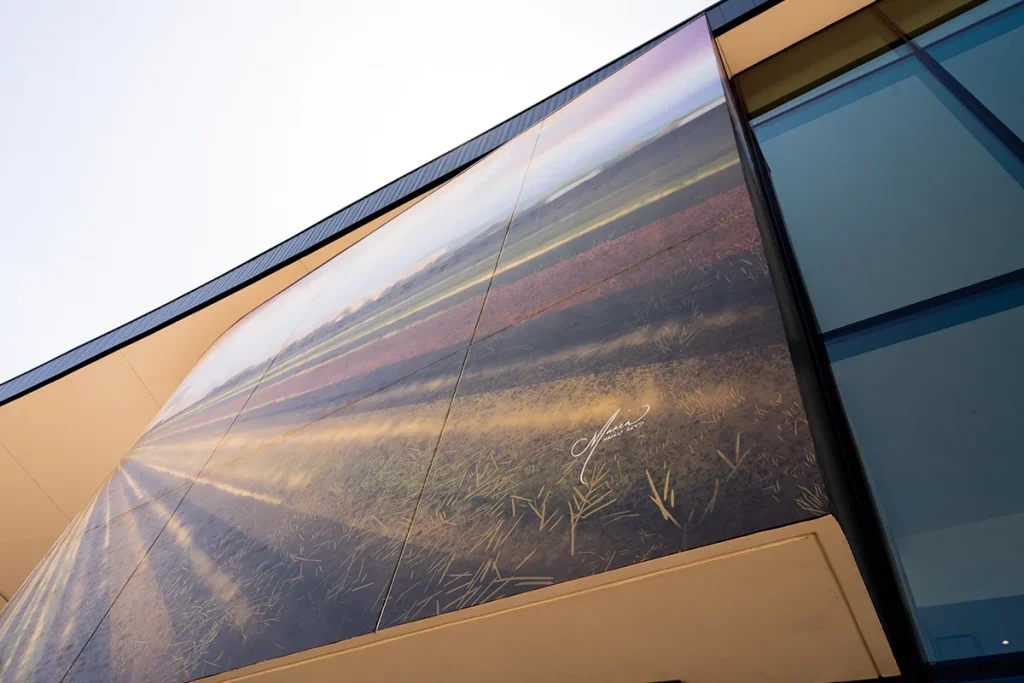
Print film
The film must be appropriate for the wall, texture, expected duration, printing process, and exposure. Smooth painted walls may allow a different construction than rough brick, concrete, or stucco.
Specialty conformable films are available for textured masonry. Aggressive high-tack films may be appropriate for certain difficult surfaces, but stronger adhesive does not automatically mean better performance. The film still needs sufficient surface contact, compatible texture, and a stable substrate.
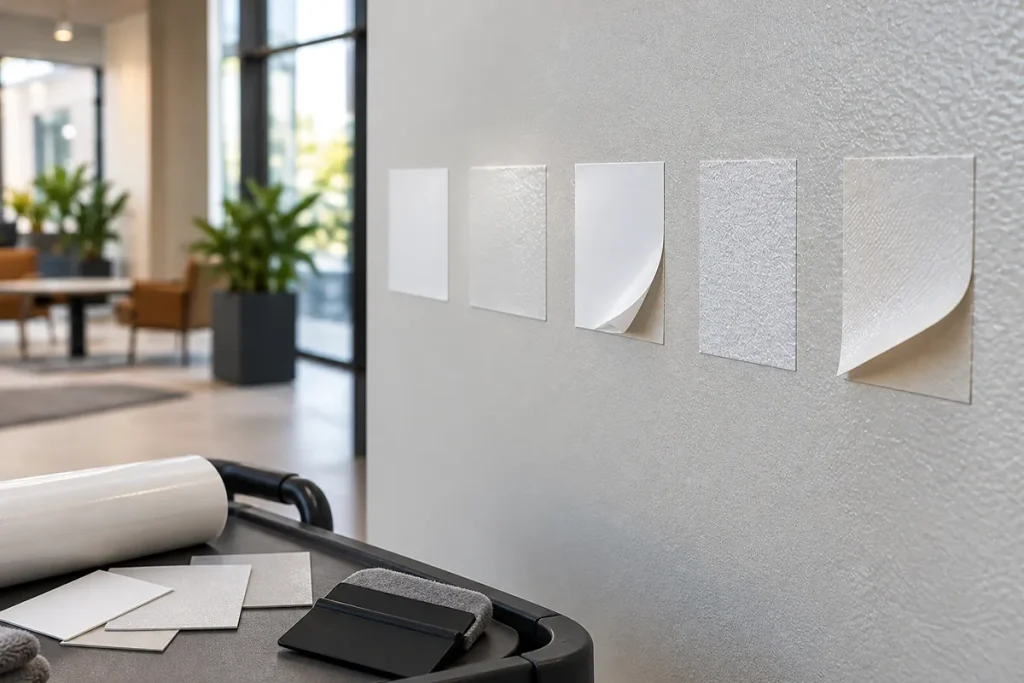
Adhesive
Adhesive selection affects initial tack, final bond, repositionability, removability, and compatibility with the wall coating.
Some modern paints and highly scrub-resistant coatings can be difficult for wall films. Unknown paints, elastomeric coatings, low-sheen finishes, silicone-containing coatings, and repeatedly repainted surfaces should be evaluated carefully.
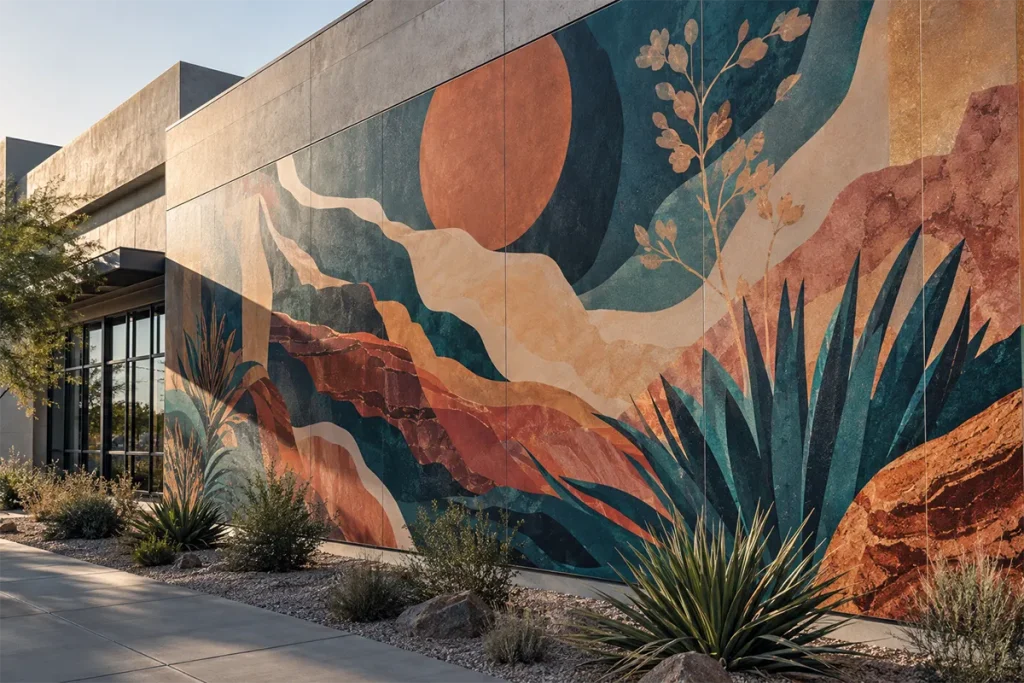
Printed image and ink system
The approved graphic construction should account for the printer, ink, film, curing requirements, and protective layer. Manufacturers may base performance or warranty eligibility on specific combinations.
Color expectations should also reflect the exterior environment. Viewing distance, lighting, wall texture, glare, and the visual effect of seams can influence proofing and artwork decisions.
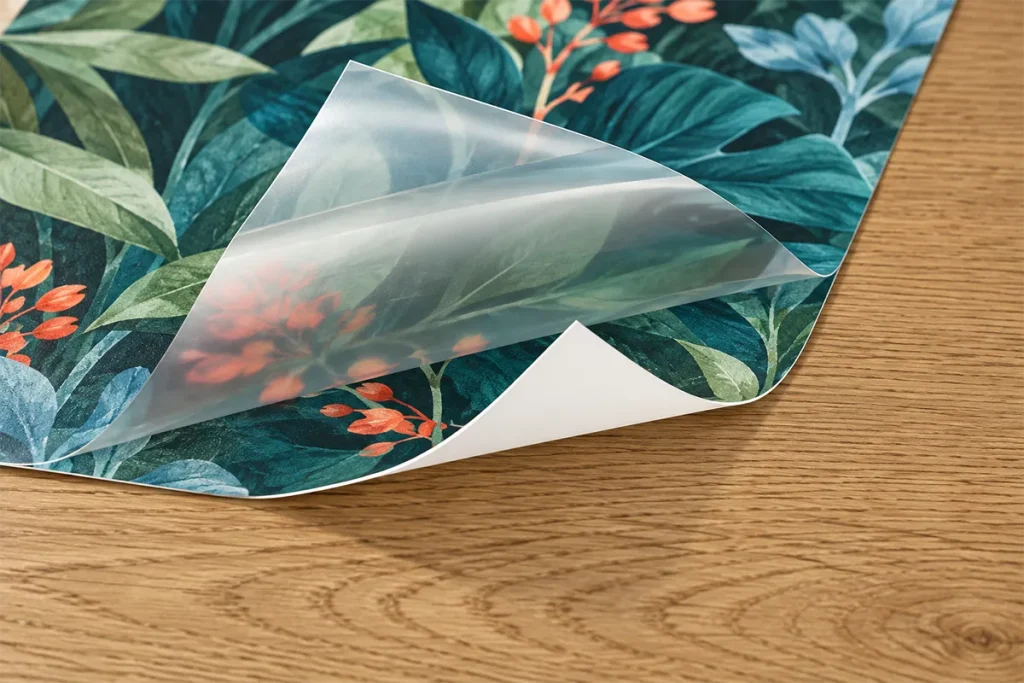
Protective overlaminate or finish
A manufacturer-approved overlaminate is commonly considered for commercial exterior murals. Depending on the approved system, it can help protect the printed image from UV exposure, abrasion, moisture, cleaning, and handling.
The laminate should remain compatible with the film. A highly conformable wall film generally requires a compatible conformable laminate so the completed construction can follow the wall texture.
Anti-graffiti protection is a separate specification decision. Hard polyester protection may work well on smooth, high-risk surfaces but can reduce conformability on deeply textured masonry. The entire combination should be approved for the application.
Liquid clear coats also exist, but they should not be treated as a universal replacement for a tested film-and-overlaminate system.
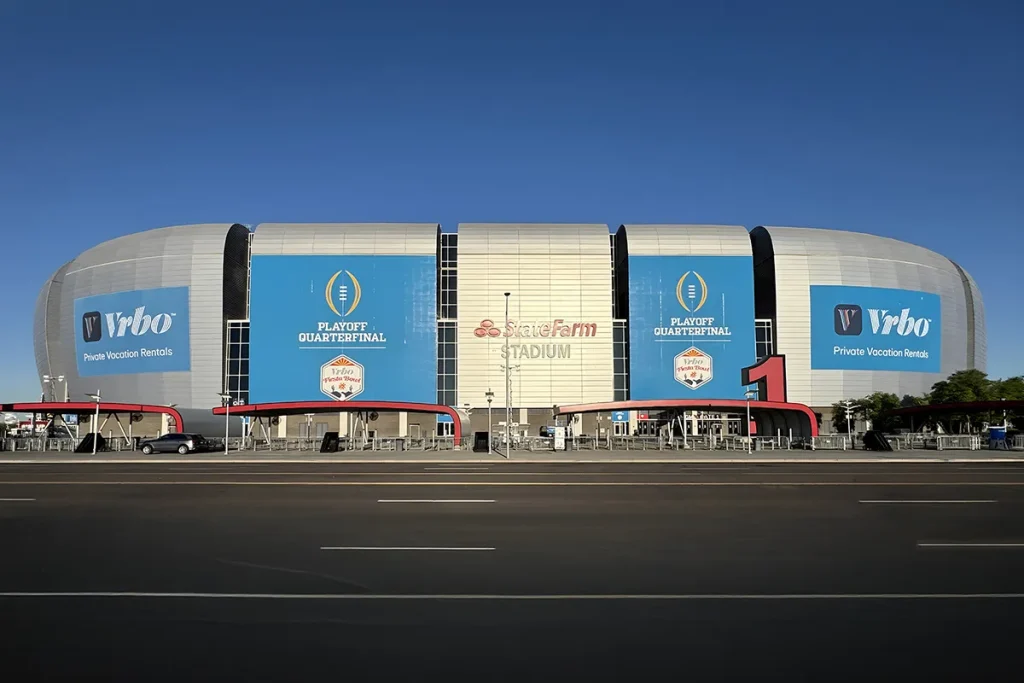
Panels, seams, and edges
Panel width, overlap, seam direction, edge treatment, and alignment can affect appearance and performance.
These decisions should account for:
- Wall dimensions and obstructions
- Dominant viewing direction
- Artwork alignment
- Texture and mortar joints
- Water-shedding direction
- Installer access
- Anticipated expansion and movement
- Future repair or panel replacement
Seam planning belongs in the production and installation plan, not as a field decision made after the graphic arrives.
Use Field Testing to Confirm Compatibility
Product literature helps narrow the options, but it cannot account for every wall coating, repair, contaminant, texture, or local condition.
A representative adhesion test can provide direct information about the actual wall.
A useful test should:
- Use the proposed or comparable printed construction.
- Include the intended laminate when applicable.
- Be installed on a representative area of the wall.
- Include difficult or extreme areas when possible.
- Follow the intended cleaning and preparation procedure.
- Remain in place long enough to evaluate initial bond development.
- Be inspected for lifting, curling, bridging, paint separation, or other problems.
- Be removed carefully to evaluate the bond and effect on the underlying surface.
Testing is especially valuable for painted stucco, painted masonry, unknown coatings, older concrete, slightly textured walls, and projects where removal condition matters.
A passed test supports the material decision for the evaluated area and conditions. It does not correct active moisture, unstable coatings, or structural deterioration elsewhere on the wall.
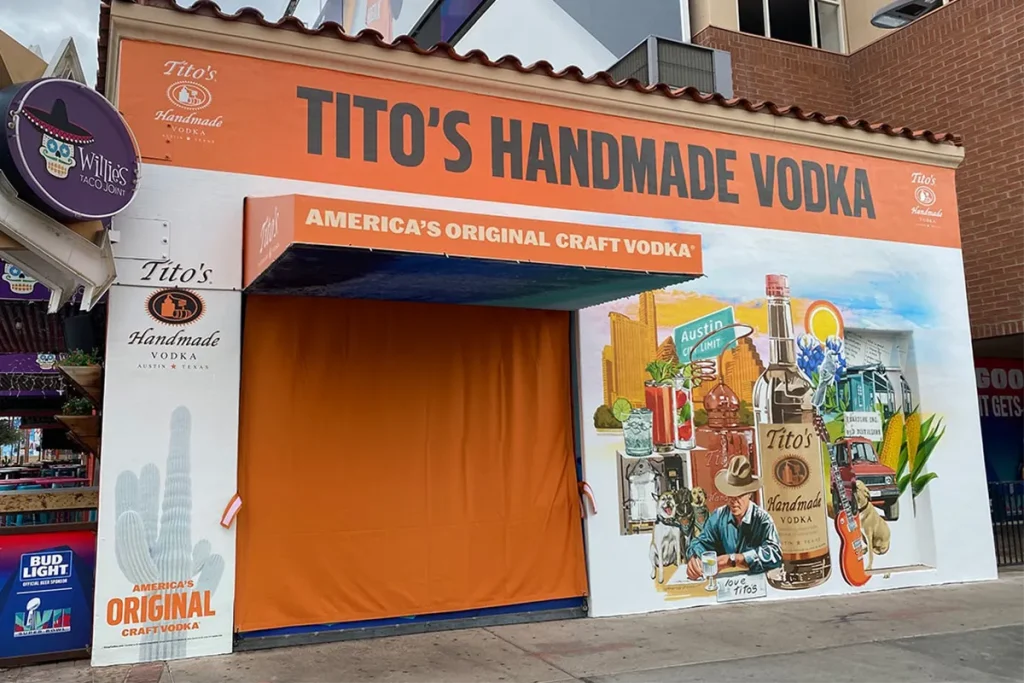
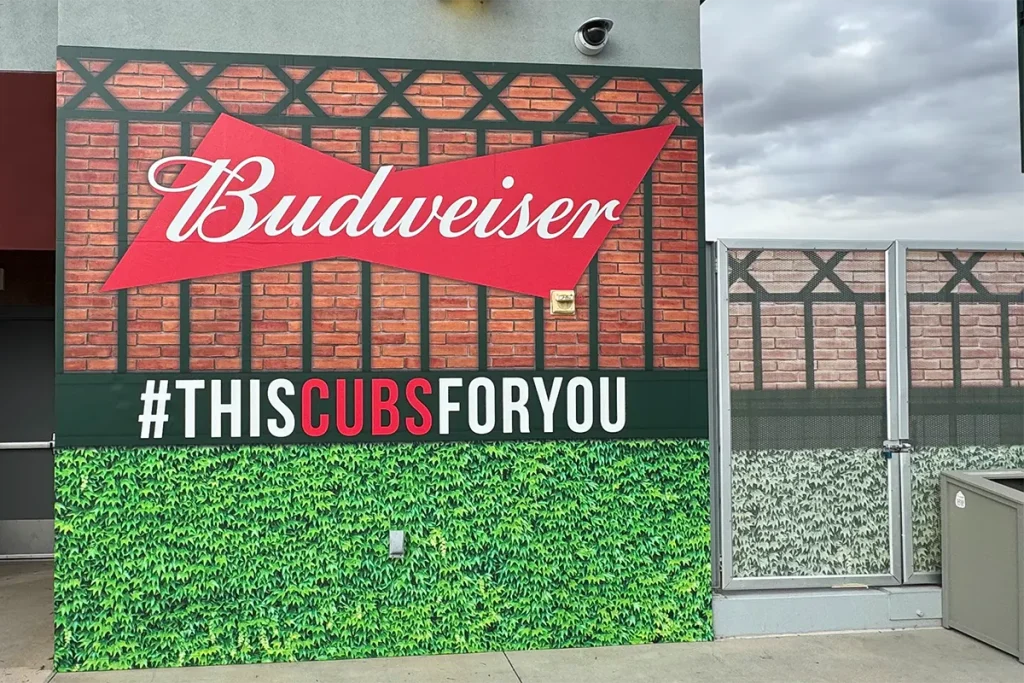
Planning an exterior application? Image Craft can help evaluate the project conditions and identify a suitable custom wall mural production and installation approach before artwork and materials are finalized.
Prepare the Wall for the Selected System
Preparation requirements should follow the selected manufacturer’s technical documentation and the conditions found during the site assessment.
Depending on the wall, preparation may include:
- Removing dirt, chalk, dust, soot, grease, salts, and loose material
- Brushing or washing textured masonry
- Using an appropriate cleaning solution for the contaminant
- Rinsing away cleaning residue
- Allowing porous masonry to dry completely
- Repairing unstable stucco, mortar, concrete, or coatings
- Sealing or painting porous masonry when appropriate
- Allowing new paint, sealers, repairs, or concrete to cure
- Testing the completed surface before full production
A wall should not be considered ready simply because it looks clean. Dust can remain in stucco texture and mortar joints. Moisture can remain beneath the surface after rain or pressure washing. Paint can feel dry while still curing or releasing compounds that affect adhesion.
The preparation plan should be documented and coordinated with the property owner, general contractor, painter, installer, and graphic provider when several parties are involved.
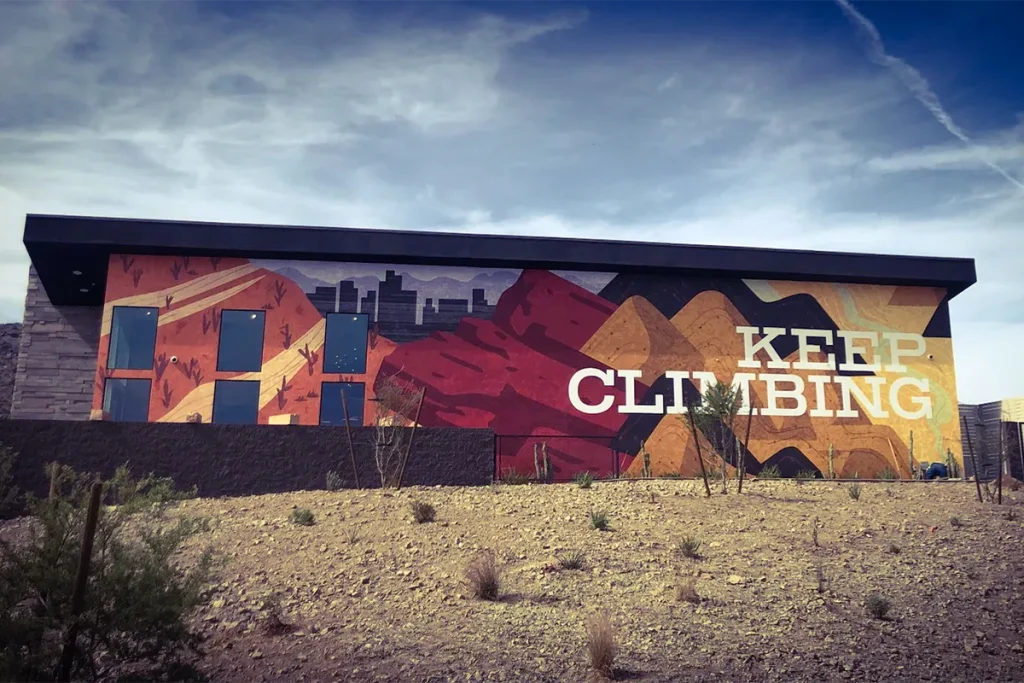
Arizona Requires a More Conservative Exterior Specification
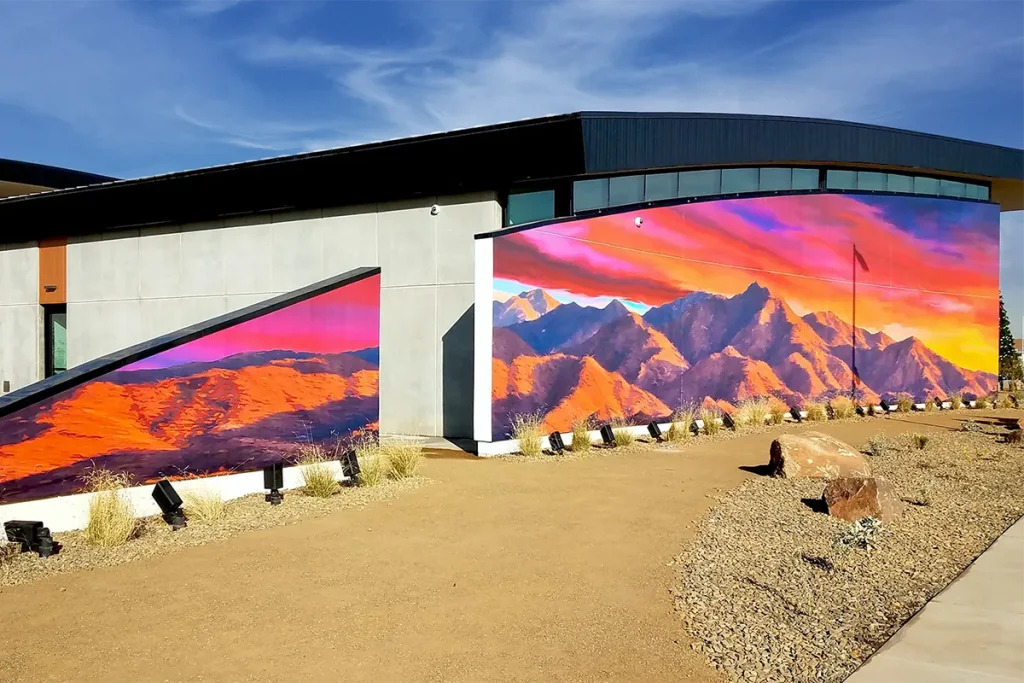
Arizona exterior applications should be evaluated by location and exposure rather than treated as one uniform climate.
Solar exposure and wall orientation
A shaded north-facing wall and a west-facing Phoenix wall experience very different solar and thermal conditions.
South, west, and southwest exposures typically deserve closer evaluation because they may receive prolonged direct sun and elevated surface temperatures. This can affect material expectations, laminate selection, installation timing, and anticipated service life.
Product warranties may also treat Desert Southwest exposure differently from ordinary vertical exposure. The specific product bulletin and approved graphic construction should be reviewed rather than assuming a national durability figure applies unchanged.
Wall temperature during installation
Air temperature does not tell the full story. A wall in direct Arizona sun can be considerably hotter than the surrounding air.
Installers should evaluate the surface temperature against the requirements for the selected material. Appropriate scheduling may involve:
- Early-morning installation
- Shaded working periods
- Cooler seasons
- Temporary shade where practical
- Direct surface-temperature measurement
- Avoiding installation during extreme wall temperatures
Installation timing is part of the technical plan, especially when heat affects adhesive behavior or the installer’s ability to apply the film consistently.
Dust and surface contamination
Desert dust can settle within textured stucco, mortar joints, and porous concrete. A surface may appear clean while retaining a powdery layer that interferes with adhesive contact.
Cleaning and testing should account for contamination held within the texture, not only visible material on the face of the wall.
Monsoon moisture and wind
Arizona is dry overall, but monsoon storms can bring concentrated rain, wind, and dust. Porous masonry may retain moisture after the visible surface appears dry.
Installation should not proceed until the wall meets the drying requirements of the selected system. Wind, access equipment, airborne dust, and site safety should also be considered when scheduling exterior installation.
Heat cycling
Repeated heating and cooling can place stress on the film, laminate, adhesive, seams, and edges. Compatible materials, correct installation pressure, appropriate heat-forming procedures, seated edges, and avoiding trapped tension become especially important.
High-elevation conditions
Phoenix, Tucson, Flagstaff, Prescott, and other Arizona markets do not have the same exterior environment. High-elevation locations may introduce snow, ice, colder installation temperatures, and freeze-and-thaw cycles.
Some specialty textured-wall films have different expected performance when freeze-and-thaw exposure is present. The product construction should be reviewed for the project’s actual location.
Common Outdoor Wall-Mural Failures
Many mural problems can be traced to a mismatch among the wall, materials, environment, and installation process.
| Visible Problem | Potential Contributing Conditions | Preventive Approach |
|---|---|---|
| Lifting edges | Dust, moisture, insufficient adhesive contact, incompatible coating, poor edge seating, or excessive stress | Clean and dry the wall, test compatibility, follow edge and installation requirements, and avoid trapped tension |
| Bubbles or blisters | Contamination, trapped air, moisture, outgassing paint, or improper application | Confirm cure, clean correctly, use the approved installation method, and investigate moisture |
| Film bridging over texture | Material lacks conformability or was not worked into the surface | Select a texture-compatible construction and use the approved heat-and-pressure technique |
| Punctures over sharp texture | Stucco or masonry features are too sharp for the film | Repair the surface or choose another mural construction |
| Seam movement or separation | Thermal stress, inadequate overlap, surface movement, or poor seam planning | Follow system-specific seam requirements and plan panel direction before production |
| Premature fading or wear | High exposure, unsuitable protection, abrasion, harsh cleaning, or unrealistic duration expectations | Match materials and protection to exposure and provide system-specific care instructions |
| Paint releases with the graphic | Weak paint-to-wall bond or incompatible coating | Evaluate both adhesive-to-paint and paint-to-wall bonds before installation |
| Moisture-related failure | Active water movement, damp masonry, leaks, irrigation, or installation before drying | Correct the source of moisture and allow the wall to dry before proceeding |
| White salts appear around the graphic | Moisture is carrying salts through masonry | Investigate and resolve moisture transport before installation |
| Difficult or damaging removal | Strong final adhesive bond, fragile paint, unsuitable surface, long exposure, or incorrect removal technique | Define removal expectations early and follow the manufacturer’s approved removal process |
Failure analysis should consider the complete wall assembly. Replacing the graphic without correcting the underlying cause can lead to the same problem again.
Plan the Installation Before Releasing Production
Large exterior murals involve site logistics as well as print production.
The installation plan should address:
- Final field dimensions
- Wall repairs and preparation responsibilities
- Required drying and curing time
- Access equipment
- Pedestrian and vehicle control
- Nearby landscaping, utilities, fixtures, and obstructions
- Installer working hours
- Wind and weather limitations
- Staging and storage
- Panel numbering and install sequence
- Alignment reference points
- Seams, corners, penetrations, and edges
- Site protection and cleanup
- Inspection and client acceptance
- Contingency plans for unsuitable conditions
Artwork should reflect the final measured wall and approved panel plan. Important visual elements should not fall across difficult corners, penetrations, deep joints, or other features without deliberate planning.
For multi-location projects, consistent surveys, location schedules, artwork naming, proof approval, packaging, and installation reporting can help control variation among sites.
Plan for Maintenance, Repair, and Eventual Replacement
The project should include realistic care and removal expectations.
Maintenance recommendations depend on the film, laminate, exposure, contaminants, and cleaning products. Cleaning instructions should follow the approved graphic construction rather than relying on a generic wall-mural procedure.
The handoff package may include:
- Approved material and laminate
- Manufacturer care information
- Cleaning limitations
- Inspection recommendations
- Warranty documentation when applicable
- Final artwork and production records
- Panel map
- Installation date
- Site photographs
- Extra material or replacement-panel strategy
- Removal instructions
- Contact information for service questions
Removable adhesive should not be interpreted as a guarantee of damage-free removal from every wall. Paint condition, wall preparation, duration, environmental exposure, adhesive build, and removal technique can all affect the outcome.
When Another Mural System May Be More Appropriate
A pressure-sensitive wall graphic is one option among several.
Another system may be better when the wall has:
- Very rough or sharp texture
- Deep or irregular mortar joints
- Unresolved moisture movement
- Unstable coatings or masonry
- A substantially sloped or horizontal orientation
- Conditions outside the tested limits of available films
- A failed adhesion test
- Performance expectations the proposed film cannot support
Alternatives may include:
- Printed aluminum composite panels
- Mechanically fastened sign panels
- Stand-off panel systems
- Tensioned fabric graphics
- Framed graphic systems
- A directly painted mural
- Repairing, sealing, or painting the wall before reconsidering adhesive graphics
The strongest recommendation may be to change the mural construction instead of selecting a more aggressive adhesive.
Outdoor Wall-Mural Planning Checklist
Before requesting final pricing or authorizing production, confirm:
- What is the wall made of?
- Is the wall structurally and visually sound?
- Is it painted, sealed, coated, or uncoated?
- Is the coating known and fully cured?
- Is there evidence of moisture, efflorescence, or water intrusion?
- How deep, sharp, or irregular is the texture?
- Which direction does the wall face?
- How much direct sun does it receive?
- Is the surface vertical, sloped, or horizontal?
- How will Arizona heat or high-elevation freeze-and-thaw conditions affect it?
- How long is the mural expected to remain?
- Will it require cleaning or graffiti protection?
- What condition is expected after removal?
- Has a representative adhesion test been completed?
- Who is responsible for cleaning, repair, sealing, painting, and site readiness?
- How will installers access the wall?
- What weather and surface-temperature limits apply?
- How will panels, seams, edges, and obstructions be handled?
- What documentation and maintenance guidance will be provided?
Answering these questions early helps the project team choose an appropriate system, establish realistic expectations, and avoid preventable production and installation problems.
Discuss Your Outdoor Wall Mural Project
Outdoor murals require coordination among the wall, environment, graphic construction, artwork, and installation plan. Image Craft helps commercial project teams evaluate these factors and develop a mural solution appropriate for the application.
Explore Image Craft’s custom wall mural capabilities and talk with our team about your wall surface, location, artwork, expected lifespan, and installation requirements.